How to Keep Muscle While Losing Weight
Fast weight loss, especially on a GLP-1 medication, can cost you muscle. Learn how to keep muscle while losing weight with protein, strength training, body composition tracking and physician-guided care.
To keep muscle while losing weight, eat enough protein at every meal, train your muscles two or more times a week, lose weight at a steady pace and track your body composition, not just the scale. These steps matter even more on a GLP-1 medication, because fast weight loss can take muscle along with fat.
Losing weight is a big win for your joints, heart and energy. But the number on the scale does not tell the whole story. When weight comes off quickly, part of it can be muscle, and muscle is what keeps you strong, steady and active. At Ready Pain Management in Gulf Breeze, FL, we see this question often from patients starting GLP-1 medications. This guide explains how to keep muscle while losing weight and how physician-guided care can help.
What Happens to Muscle During GLP-1 Weight Loss
GLP-1 medications reduce appetite and help people eat less, which leads to meaningful weight loss for many adults. Any time you eat less than your body burns, it pulls energy from fat stores. It can also break down some muscle, especially when protein intake is low and muscles are not being challenged.
Why Lean Mass Drops Alongside Fat
In clinical trials of GLP-1 based therapies, lean mass has often made up roughly 25 to 40 percent of the total weight lost, based on body scans. A 2024 review of lean body mass changes with GLP-1 based therapies describes this pattern and the strategies that may reduce it. Lean mass includes muscle, organs and water, so not all of it is muscle. Still, losing less of it is a worthy goal, and a smaller appetite can make it easy to fall short on protein.
Why Muscle Matters for Metabolism, Strength and Long-Term Results
Muscle does far more than help you lift things. It supports your joints and spine, keeps your balance steady and helps you get up from a chair or climb stairs. Muscle also burns more energy at rest than fat does. When you lose muscle, your body may need fewer calories each day, which can make it easier to regain weight later.
Muscle naturally declines with age, starting as early as your 30s and 40s. Fast weight loss on top of normal aging can leave some adults weaker than before, even at a lower weight. For people with back, knee or hip pain, stronger muscles often mean better support and more comfortable movement.
How to Keep Muscle While Losing Weight
The good news is that muscle responds to the right signals at any age. These steps work together, and results vary from person to person.
Adequate Protein and Nutrition Guidance
Protein gives your body the building blocks it needs to keep and repair muscle. Many weight loss studies use about 1.2 to 1.6 grams of protein per kilogram of body weight per day, which is more than the basic daily recommendation. Spread protein across meals, and start each meal with your protein source in case your appetite runs out. Lean meats, fish, eggs, Greek yogurt, cottage cheese, beans and protein shakes can all help. People with kidney disease should ask their physician before raising protein.
Resistance Training and Muscle Activation
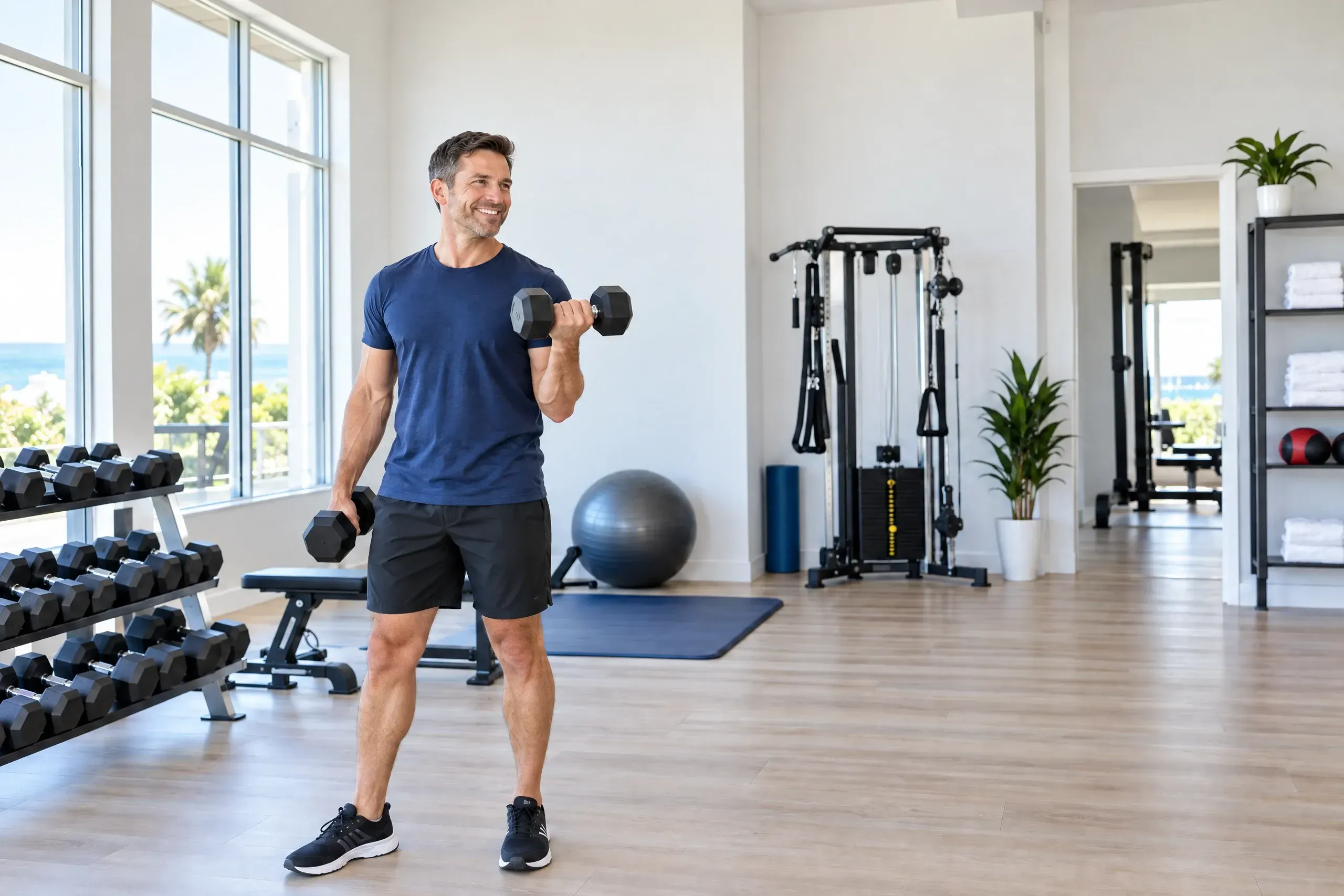
Strength training is the strongest signal you can send your muscles. Aim for at least two sessions a week that work your legs, hips, back, chest and arms. Bodyweight moves, bands and light weights all count. If pain has kept you from exercise, start small and progress slowly. Our team can help you find movements that respect your joints.
Non-Invasive Muscle Building
Some patients need extra help building strength, especially when pain limits exercise. Emsculpt NEO for muscle building is an FDA-cleared device that combines radiofrequency heat with high-intensity focused electromagnetic (HIFEM) energy. Each 30-minute session triggers powerful muscle contractions in areas such as the abdomen, buttocks, arms, thighs and calves. Imaging studies show increases in muscle thickness and reductions in fat in treated areas. It has not been studied as a replacement for exercise during GLP-1 treatment, so we use it as a complement to protein and strength work. Many patients pair it with the Core to Floor program for core and pelvic floor strength.
Physician Monitoring and Body Composition Tracking
The scale cannot tell muscle from fat, so tracking body composition gives a clearer picture. Common methods include DEXA scans, bioelectrical impedance scales, waist measurements and simple strength tests such as grip strength or how easily you rise from a chair. Regular check-ins let your physician adjust your plan if strength starts slipping.
How a Physician-Guided Program Differs From Prescription-Only Care
Some weight loss options focus only on writing a prescription. A physician-guided program looks at the whole person. Our medical weight loss in Gulf Breeze, FL pairs GLP-1 based weight support, when appropriate, with nutrition guidance, strength support and regular follow-up. Dr. Douglas Boler, an anesthesiologist and pain physician who also directs core strength and body optimization at our practice, reviews your health history, pain and goals. Some patients also ask about peptide therapy for recovery. Many peptides are not FDA approved and evidence is limited, so any option is screened and discussed honestly.
Frequently Asked Questions About Keeping Muscle While Losing Weight
How do you keep muscle while losing weight?
You keep muscle while losing weight by eating enough protein, doing strength training at least twice a week, losing weight at a steady pace and checking body composition over time. Sleep and hydration help too. On a GLP-1 medication, these habits are even more important because appetite is lower and weight can drop quickly.
Does semaglutide cause muscle loss?
Semaglutide can lead to some muscle loss, as can any method that causes significant weight loss. Body scan studies show that part of the weight lost is lean mass, which includes muscle. Eating enough protein and doing resistance training can help protect muscle while you lose weight on this type of medication.
How much muscle do you lose on GLP-1 medications?
Studies of GLP-1 medications have reported that roughly 25 to 40 percent of the weight lost can come from lean mass, though not all lean mass is muscle. The amount varies by person, diet, activity and how fast weight comes off. Protein and strength training may help lower that share.
How much protein should I eat while losing weight?
Many weight loss studies use about 1.2 to 1.6 grams of protein per kilogram of body weight per day. For a 200-pound adult, that is roughly 110 to 145 grams. Your needs depend on your age, kidney health and activity level, so ask your physician for a personal target.
Can Emsculpt NEO help preserve muscle during weight loss?
Emsculpt NEO may help build muscle in treated areas, and studies show increased muscle thickness after a series of sessions. It has not been tested as a way to prevent muscle loss on GLP-1 medications, so it works best alongside protein and exercise. Learn how Emsculpt NEO sessions fit a plan.
Why does muscle loss slow your metabolism?
Muscle loss slows your metabolism because muscle uses more energy at rest than fat does. When you lose muscle, your body needs fewer calories each day. That can make it easier to regain weight once you stop a medication or return to old habits, which is why protecting muscle supports long-term results.
How is muscle mass measured?
Muscle mass is most accurately measured with a DEXA scan, which separates fat, lean tissue and bone. Bioelectrical impedance scales offer an easier estimate but can be affected by hydration. Simple tests, such as grip strength, chair stands and walking speed, show how well your muscles actually work.
Is muscle loss on GLP-1 permanent?
Muscle loss on GLP-1 medications is not usually permanent. Muscle can be rebuilt with enough protein and regular strength training, even later in life. The sooner you start protecting muscle, the easier it tends to be. Working with a physician helps you track progress and adjust your plan.
Book a Body Composition Consultation in Gulf Breeze, FL
If you are losing weight, or planning to, let us help you protect the muscle you have worked hard for. At your visit we review your goals, health history and body composition and build a plan that supports strength, not just a lower number on the scale. Weight loss consultations, lab review and follow-up are available by telemedicine. Schedule your weight loss consultation or call (850) 735-4907. Telemedicine visits are available Monday and Tuesday from 6:00 to 7:00 PM CST, and our Gulf Breeze office is open for in-person and telemedicine visits Thursday and Friday from 9:00 AM to 5:00 PM CST.
Related Articles
- Low Testosterone Symptoms: Signs It May Be Time to Check Your Levels: How low testosterone can affect muscle, energy and body fat.
- Neuropathy in Your Feet? Signs, Causes and Non-Opioid Ways to Find Relief: Early signs of nerve problems in the feet and how to find relief.
- Reset Without Guilt: A kinder way to restart healthy habits.
References
- Neeland et al., Diabetes Obes Metab. (2024). Changes in lean body mass with glucagon-like peptide-1-based therapies and mitigation strategies. PMID: 38937282.
- Karakasis et al., Metabolism. (2025). Effect of glucagon-like peptide-1 receptor agonists and co-agonists on body composition: Systematic review and network meta-analysis. PMID: 39719170.
- Leidy et al., Am J Clin Nutr. (2015). The role of protein in weight loss and maintenance. PMID: 25926512.
- Bellicha et al., Obes Rev. (2021). Effect of exercise training on weight loss, body composition changes, and weight maintenance in adults with overweight or obesity: An overview of 12 systematic reviews and 149 studies. PMID: 33955140.
- Locatelli et al., Diabetes Care. (2024). Incretin-Based Weight Loss Pharmacotherapy: Can Resistance Exercise Optimize Changes in Body Composition?. PMID: 38687506.
- Jacob et al., Dermatol Surg. (2021). Efficacy and Safety of Simultaneous Application of HIFEM and Synchronized Radiofrequency for Abdominal Fat Reduction and Muscle Toning: A Multicenter Magnetic Resonance Imaging Evaluation Study. PMID: 34001694.