Too Much Too Soon
Jumping mileage, weight or playing time faster than your tissue can adapt overloads tendons and muscles.

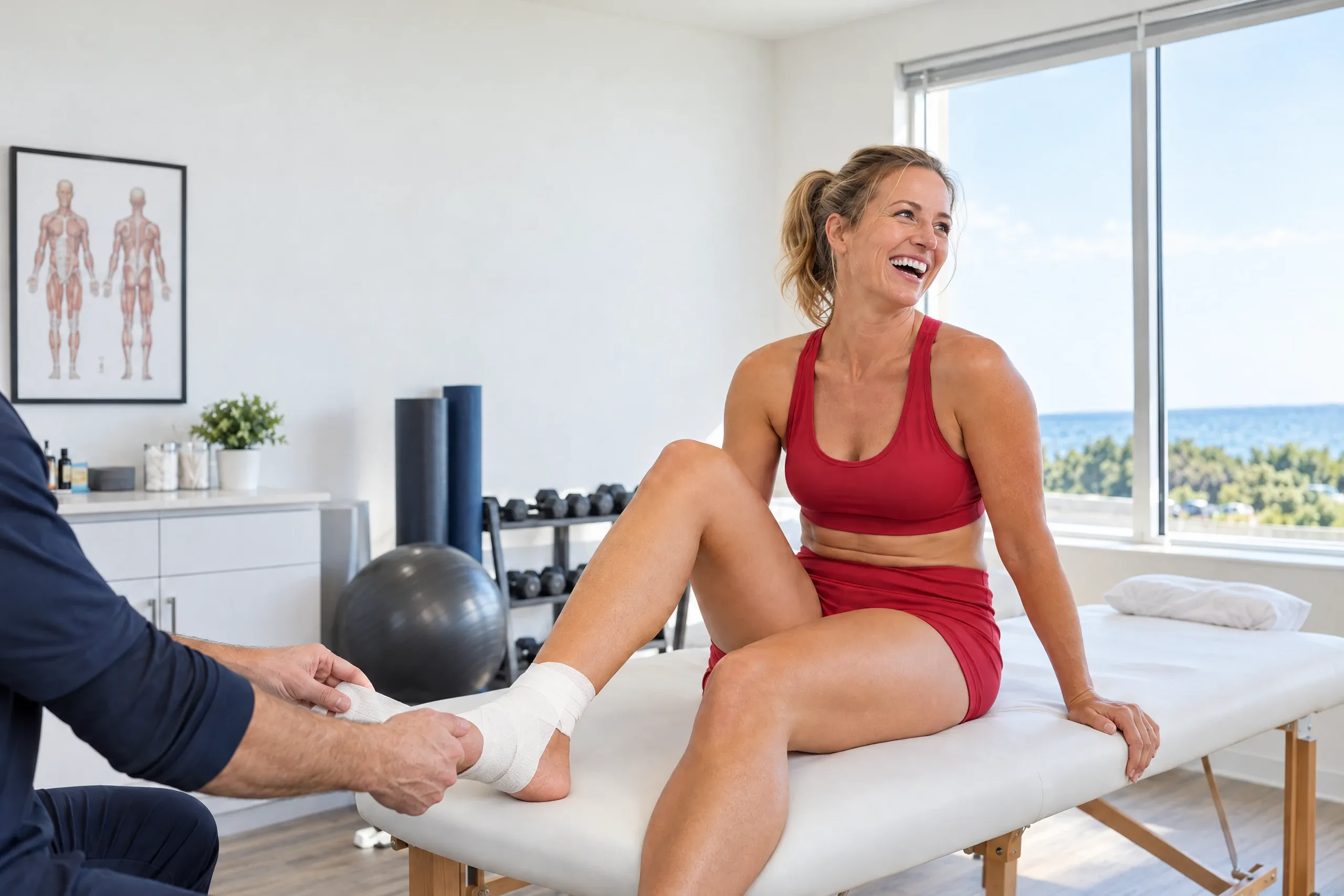
Faster Recovery and Return to Activity
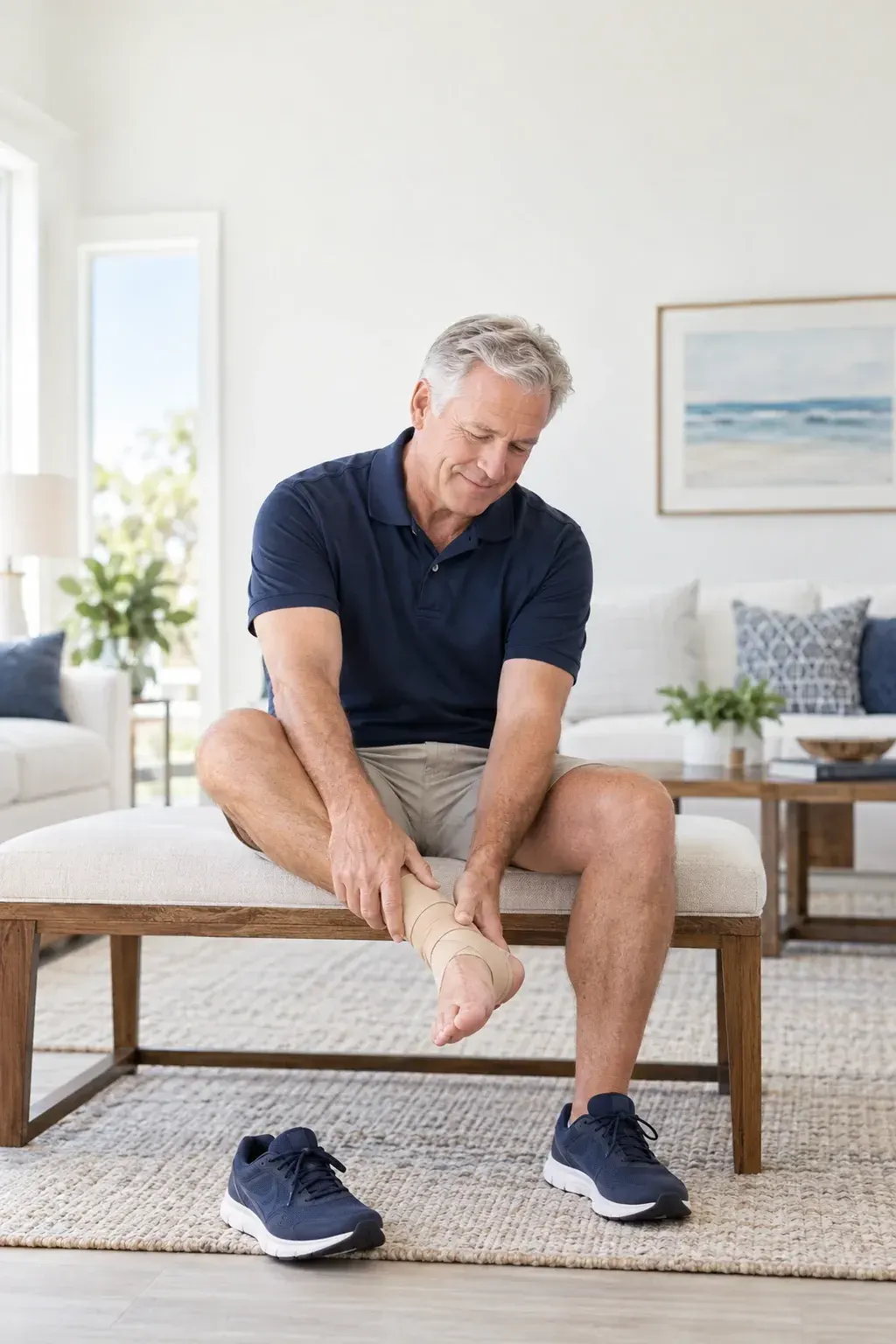
Recognizing the Signs
A sports injury is damage to muscles, tendons, ligaments, joints or bones that happens during exercise, sports or active work. Some injuries are acute, such as a sprained ankle or a pulled hamstring. Others are overuse injuries, such as tendon pain in the elbow, shoulder, knee or heel, that build slowly from repeated stress.
You do not have to be a competitive athlete to have one. Runners, golfers, pickleball and tennis players, weekend gym-goers and people who work on their feet all get hurt. When you are injured, you may feel pain that flares with activity, swelling, stiffness or a joint that no longer feels strong.
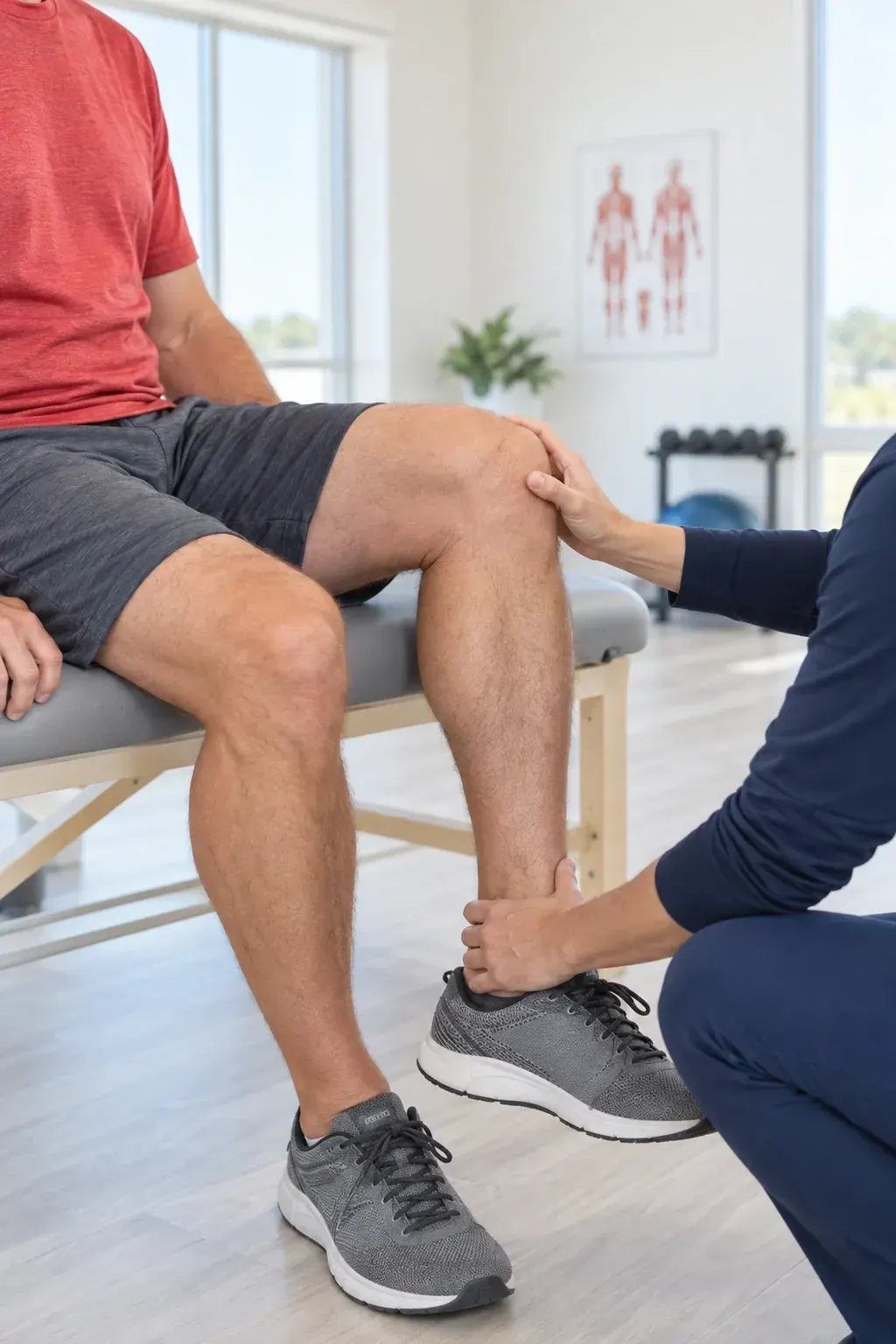
Sports injury treatment at Ready Pain Management in Gulf Breeze, FL is built around getting you moving again. Dr. Douglas Boler combines shockwave therapy for stubborn tendon pain, therapeutic massage for tight, overworked muscles and Emsculpt NEO to rebuild muscle strength with our +GYM focus on strength and a safe return to activity. Sports injuries are one of many pain conditions we treat across the Florida Panhandle.

Understanding the Root Causes
Muscles and tendons adapt to load. When training increases gradually, tissue grows stronger. When load jumps too fast, such as a sudden increase in mileage or a new sport, tendons and muscles can break down faster than they repair. Tendons have a limited blood supply, so they often take 6 to 12 weeks or longer to remodel after an injury.
Acute injuries happen in a moment: a twist, a fall, a collision or a sprint that overstretches a muscle. The National Institute of Arthritis and Musculoskeletal and Skin Diseases lists sprains, strains, knee injuries, Achilles tendon injuries and rotator cuff injuries among the most common sports injuries.
After an injury, pain and disuse can weaken the muscles around the area. That weakness changes how you move and raises the chance of hurting the same spot again. This is why rebuilding strength matters as much as calming pain.
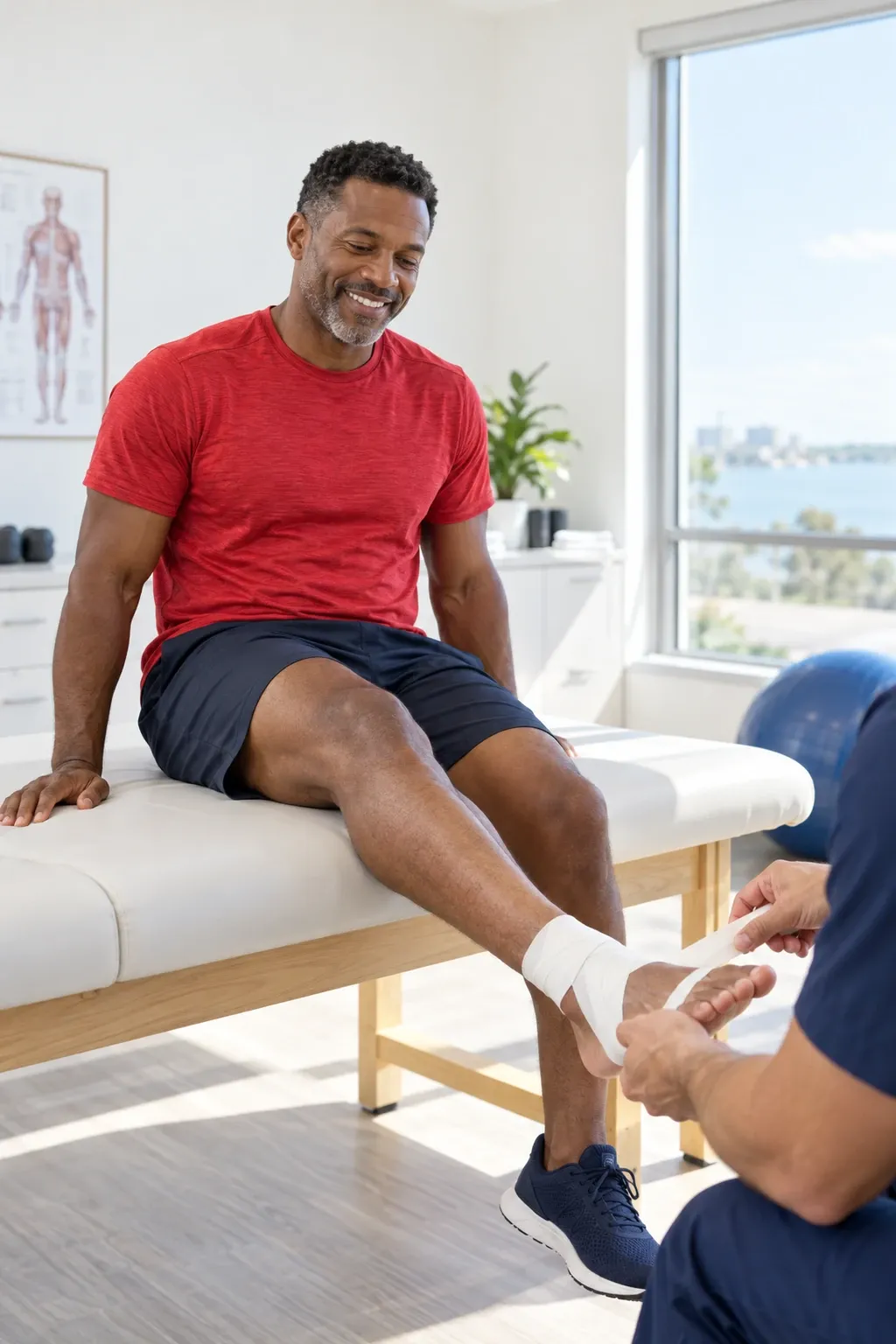
How Rebuilding Strength Protects You
Rest helps in the first days after an injury, but long periods of complete rest can leave muscles weaker and joints stiffer. Most rehab guidance favors a gradual return to movement guided by pain, with strength work added as tissue heals. Healing time depends on the injury, your age and your overall health, and results vary.
At Ready Pain, we pair pain relief with strength. Shockwave therapy uses FDA-cleared technology for specific indications to stimulate healing in long-lasting tendon problems. Therapeutic massage with Kimberly Boler, LMT (MA76368), and Medicupping for muscle recovery help ease tight, overworked tissue. Emsculpt NEO is an FDA-cleared device that strengthens muscle and can support, not replace, your rehab exercises.
Not every injury belongs in our office. Suspected fractures, dislocations and complete tendon or ligament tears need prompt imaging and an orthopedic evaluation, and we will refer you when that is the right next step. If pain started after a crash, our article on why pain often starts days after a car accident may help, and our guide to resting and resetting without guilt covers recovery habits.
Identifying Your Triggers
Jumping mileage, weight or playing time faster than your tissue can adapt overloads tendons and muscles.
Cold muscles are less flexible, so sudden sprints, swings or lifts are more likely to cause a strain.
Weak hips, core or shoulders shift extra stress onto knees, ankles, elbows and the lower back.
A past sprain or strain that never fully regained its strength is one of the strongest risks for reinjury.
Short sleep, dehydration and back-to-back hard days leave muscles and tendons too little time to repair.
After age 30, muscle mass slowly declines and tendons stiffen, so recovery tends to take longer.
Expert Care in Gulf Breeze
Finding the Right Fit for Your Recovery
Compare the sports injury treatment options we offer in Gulf Breeze, FL. Most plans combine pain relief with gradual strength work.
| Treatment | How It Helps | Visit Type | Downtime | Best For |
|---|---|---|---|---|
| Shockwave Therapy | Acoustic waves stimulate healing in long-lasting tendon pain | In-office sessions | None to minimal | Tendon pain in the heel, knee, elbow or shoulder |
| Therapeutic Massage | Hands-on work eases tight muscles and supports recovery | In-office sessions | None | Muscle strains, tightness and soreness |
| Cupping Therapy (Medicupping) | Gentle suction lifts tissue to relieve muscle tension | In-office sessions | Temporary skin marks | Tight muscles and fascia after training |
| Emsculpt NEO | Combines RF and HIFEM to build muscle strength | In-office 30-minute sessions | None | Rebuilding strength after an injury |
| Trigger Point Injections | Targeted injection to release painful muscle knots | In-office injections | Little to none | Persistent knots after a muscle strain |
Recognizing When to Seek Help
The best sports injury treatment depends on the injury. Many muscle strains and overuse injuries improve with relative rest, gentle movement and gradual strength work. When pain lingers, options such as shockwave therapy, therapeutic massage or trigger point injections may help. Suspected fractures and complete tears need imaging and an orthopedic evaluation, and we refer you when that is the right step.
In the first two to three days, ice and gentle protection can help with pain and swelling. After that, heat often eases stiffness and tight muscles before activity. Never put ice directly on skin, limit sessions to about 15 to 20 minutes, and see a clinician if swelling or pain is not improving after several days.
Shockwave therapy sends acoustic pressure waves into injured tissue to stimulate the body's own healing response. Research supports it for several long-lasting tendon problems, such as plantar fasciitis, Achilles and patellar tendon pain and tennis elbow. It is usually given as a short series of in-office sessions with little or no downtime. Results vary from person to person.
Emsculpt NEO can support recovery by helping rebuild muscle strength in areas like the thighs, buttocks, abdomen, arms and calves. It does not heal a torn tendon or ligament, and it does not replace rehab exercise. Dr. Boler decides whether it fits your plan once the injury is stable and you are ready for strengthening work.
You can usually return when pain is mild, swelling is gone, and the injured area has close to full motion and strength compared with the other side. Many minor strains take a few weeks, while tendon problems can take a few months. Returning gradually, rather than all at once, lowers the chance of hurting the same spot again.
Yes, consultations and follow-up visits can be done by telemedicine for eligible patients on Monday and Tuesday from 6:00 to 7:00 PM Central time. Telemedicine works well for reviewing your history and progress. Hands-on treatments such as shockwave, massage and Emsculpt NEO are performed in person at our Gulf Breeze office on Thursdays and Fridays.
Pricing is personalized and reviewed at your consultation because every plan is different. Ready Pain Management does not accept insurance, so care is self-pay. Third-party financing through InstaPaytient, offered through Affirm, is available subject to approval, with terms set by the financing provider. Call (850) 735-4907 with any questions before your visit.
1337 Country Club Rd, Gulf Breeze, FL, 32563
Mon - Tue: 6 PM - 7 PM
Thu - Fri: 9 AM - 5 PM