Slow Injury Recovery
Support for tendon, ligament and muscle healing alongside rehab


Physician-guided peptides for recovery, healing and healthy aging, with honest answers about the evidence.
Popular, promising and often misunderstood
Peptides are everywhere online. Social media posts promise faster healing, better sleep and a younger body. Many products are sold as "research chemicals" with no dosing guidance, no purity testing and no doctor involved. For adults with ongoing pain, slow recovery or the normal changes of aging, that is a risky way to experiment. You may not know what is in the vial, whether it fits your health history or how it interacts with your medications.
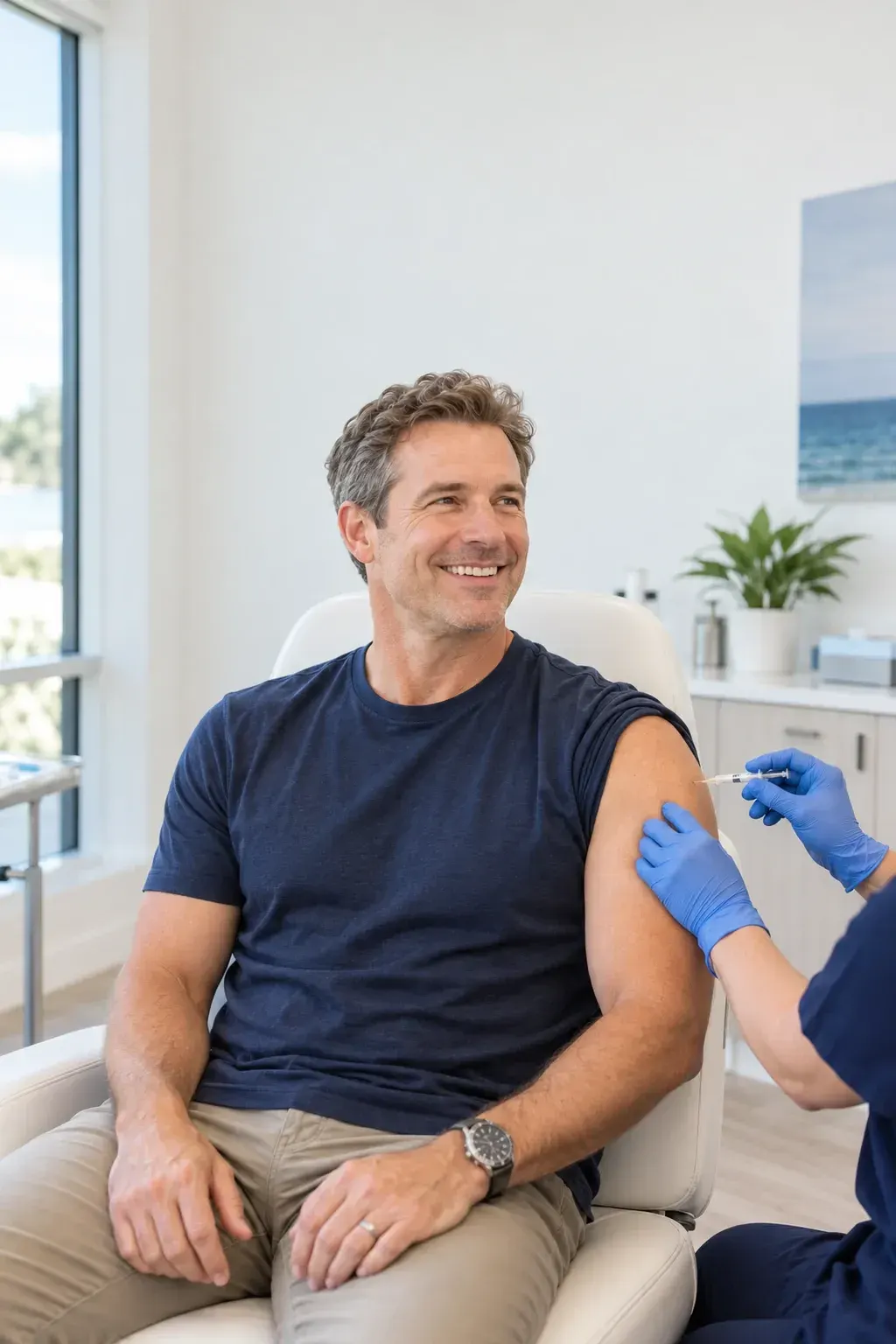
Physician-guided peptide therapy takes a different path. Dr. Boler starts with your symptoms, goals and labs. He explains which peptides have FDA approval, which do not and how strong the evidence really is. If a peptide makes sense, he sets the dose, watches for side effects and follows up. If one does not, he will tell you, and point you toward care with better support, such as strength work, sleep and nutrition.
Good to Know
Small signaling molecules, used with care
Peptide therapy uses peptides, which are short chains of amino acids that act as signals in the body. Some peptide medications, such as insulin, are FDA approved. Many popular peptides, including BPC-157, are not FDA approved for human use, and BPC-157 appears on the FDA list of compounding substances with safety concerns.
Peptides bind to specific receptors and nudge processes such as tissue repair, inflammation or growth hormone release. Most are given as small injections under the skin, and some come as oral or topical forms. Any benefit builds slowly over weeks, and Dr. Boler checks how you respond at each follow-up.
Six common reasons patients ask
Support for tendon, ligament and muscle healing alongside rehab
Part of a broader plan for achy, stiff joints that limit movement
Paired with protein and strength work to help protect lean muscle
Lab-guided review of fatigue that may have more than one cause
Options discussed when recovery suffers from restless nights
Physician-guided support for staying active and independent
Safer than going it alone






Dr. Boler reviews your history, labs and medications first
Clear answers on FDA status and how strong the research is
Plans aimed at healing and getting you moving again
Doses set and adjusted by a physician, not a sales page
Consults, lab review, dosing and follow-up from home
Peptides paired with strength, sleep and nutrition support
Your options side by side
Physician-guided peptide therapy next to four common alternatives, so you can compare oversight, regulation and evidence.
| Option | How It Works | Medical Oversight | Regulation | Evidence | Downtime | Best For |
|---|---|---|---|---|---|---|
| Peptide therapy at Ready Pain | Physician-selected peptides as signals for repair and recovery | Physician-guided | Varies by peptide, many not FDA approved | Early and limited for many peptides | None | Adults who want a screened, monitored plan |
| Online peptide sellers | Products sold as research chemicals | None | Not approved for human use | Unknown purity and dosing | None | Not recommended |
| Collagen peptide supplements | Oral protein from collagen | None needed | Sold as dietary supplements | Modest data for joints | None | Mild joint aches and general wellness |
| Hormone replacement therapy | Restores low hormone levels | Physician-guided | FDA-approved options exist | Strong for confirmed deficiency | None | Adults with low hormone levels on labs |
| Strength, sleep and nutrition | Lifestyle habits that drive repair | Coaching helpful | Not applicable | Strong for healthy aging | None | Everyone, with or without peptides |
Peptide therapy suits adults who want extra support for recovery, healing or healthy aging and who value a careful, monitored plan. It may be one part of care for arthritis pain relief, slow healing after a sports injury or joint pain that limits activity.
If fatigue or low drive point to a hormone issue, hormone replacement therapy may fit better, and our article on signs of low testosterone explains what to look for. If weight is your main goal, start with physician-guided weight management, and read how to keep muscle while losing weight.
Dr. Boler reviews your medications and history before recommending anything. When a peptide is not right for you, he will explain other options.
Four steps, guided by Dr. Boler
Dr. Boler reviews your symptoms, goals, history and medications in person or by telemedicine.
We order labs when needed and screen for conditions that make peptides unsafe for you.
If a peptide fits, you receive a written dose, schedule and injection training from our team.
Regular check-ins track your response and side effects, and the plan is adjusted or stopped.
What to watch for
The most common side effects are redness, itching or a small bump at the injection site. Some people notice headache, nausea, flushing, water retention or changes in appetite. These are usually mild and short lived. Tell us about any reaction so Dr. Boler can adjust your plan.
Many peptides have limited human research, so long-term risks are not well known. Products bought online may be contaminated or mislabeled. Some peptides can affect blood sugar or interact with other medicines. The MedlinePlus drug information library is a reliable place to look up approved medications.
Tell Dr. Boler about every medicine and supplement you take before you start. Call (850) 735-4907 about any new or unusual reaction. Seek emergency care for hives, swelling of the face or throat, or trouble breathing.
Personalized pricing, reviewed at consultation
Ready Pain Management does not accept insurance. Peptide therapy is self-pay, and pricing is personalized. Dr. Boler reviews it with you at your consultation, once he understands your goals and whether a peptide is appropriate for you.
Third-party financing is available through InstaPaytient financing powered by Affirm. Approval and terms are set by the financing provider. You can also ask about bundling care in our personalized treatment packages.
Evidence first, then a plan
Book Now20+ years in pain medicine
Clear FDA status for each option
Plans built around healing
Virtual visits four days a week
Symptoms, goals and labs first
Doses set, watched, followed up
Services that pair well with peptide therapy at Ready Pain.
Hormone replacement therapy in Gulf Breeze, FL. Restore energy, balance and vitality. Book your appointment today.
Learn moreTestosterone replacement therapy in Gulf Breeze, FL. Support energy, strength and men's health. Book today.
Learn moreMedical weight loss in Gulf Breeze, FL. Physician-guided GLP-1 programs for lasting results. Book your appointment today.
Learn moreShockwave therapy in Gulf Breeze, FL. Non-invasive relief for pain, injury and faster recovery. Book your appointment today.
Learn morePeptide therapy pricing at Ready Pain Management is personalized and reviewed at your consultation. We do not accept insurance, so care is self-pay. Your cost depends on the peptide chosen, how long your course lasts and how often you need labs and follow-up visits. Third-party financing through InstaPaytient is available, subject to approval.
Ready Pain Management offers physician-guided peptide therapy at 1337 Country Club Rd in Gulf Breeze, close to Pensacola, Navarre, Pensacola Beach and Milton. If you are searching for peptide therapy near me, you may not need to drive at all. Consultation, lab review, dosing and follow-up are all available by telemedicine for eligible patients.
No, BPC-157 is not FDA approved for human use. Most of the research on BPC-157 comes from animal and lab studies, with very few human trials. The FDA has also listed it among compounding substances that may carry safety risks, and it is banned in competitive sports. Dr. Boler will explain the honest picture and safer options.
Yes, peptide therapy is available end to end by telemedicine, including consultation, lab review, dosing and follow-up. Telemedicine visits run Monday and Tuesday from 6:00 to 7:00 PM CST and Thursday and Friday from 9:00 AM to 5:00 PM CST. Telemedicine is offered for eligible patients, and in-person visits in Gulf Breeze are always welcome.
Safety depends on the specific peptide, its source and your health. FDA-approved peptide medications have been studied for safety, but many popular peptides have limited human data. Side effects can include injection site redness, headache, nausea or changes in blood sugar. A physician screening your history and medications lowers the risk compared with buying peptides online.
Most patients who respond notice changes after several weeks, not days. Recovery, sleep or stiffness may improve gradually, and some people notice little difference. Dr. Boler checks your progress at each follow-up and adjusts or stops the plan if it is not helping. Results vary from person to person and are never guaranteed.
Most peptide injections feel like a quick, small pinch. They use a very fine needle placed just under the skin, usually on the belly or thigh. Our team shows you how to give the injection safely at home and answers your questions. Mild redness at the injection site is common and usually fades within a day.
A peptide therapy course is personalized, and many plans run in cycles of several weeks followed by a review. Dr. Boler decides the length based on your goals, the peptide used and how you respond. Some patients complete one cycle, while others repeat it after a break. Follow-up visits can be done by telemedicine.
Some FDA-approved medications for weight loss are peptides, but most peptides marketed online for fat loss have weak evidence. If losing weight is your main goal, our physician-guided medical weight loss program is the better place to start. It combines medication when appropriate, nutrition, body composition tracking and muscle protection in one plan.
Hormone replacement therapy restores a hormone that lab tests show is low, while peptide therapy uses signaling molecules to nudge processes such as repair. Hormone therapy has stronger evidence for confirmed deficiency. Peptides are more often used to support recovery and healthy aging. Dr. Boler may recommend one, both or neither based on your labs.
Good candidates are adults, often in their 30s to 60s, who want help with recovery, stiffness or healthy aging and are willing to follow a monitored plan. You should be open to strength work, sleep and nutrition changes too. Pregnancy, active cancer and certain medical conditions may rule peptides out, and Dr. Boler screens for these first.
1337 Country Club Rd, Gulf Breeze, FL, 32563
Mon - Tue: 6 PM - 7 PM
Thu - Fri: 9 AM - 5 PM