Forward Head Posture
Looking down at phones, laptops and paperwork for hours loads the neck muscles and small spinal joints far more than upright posture.

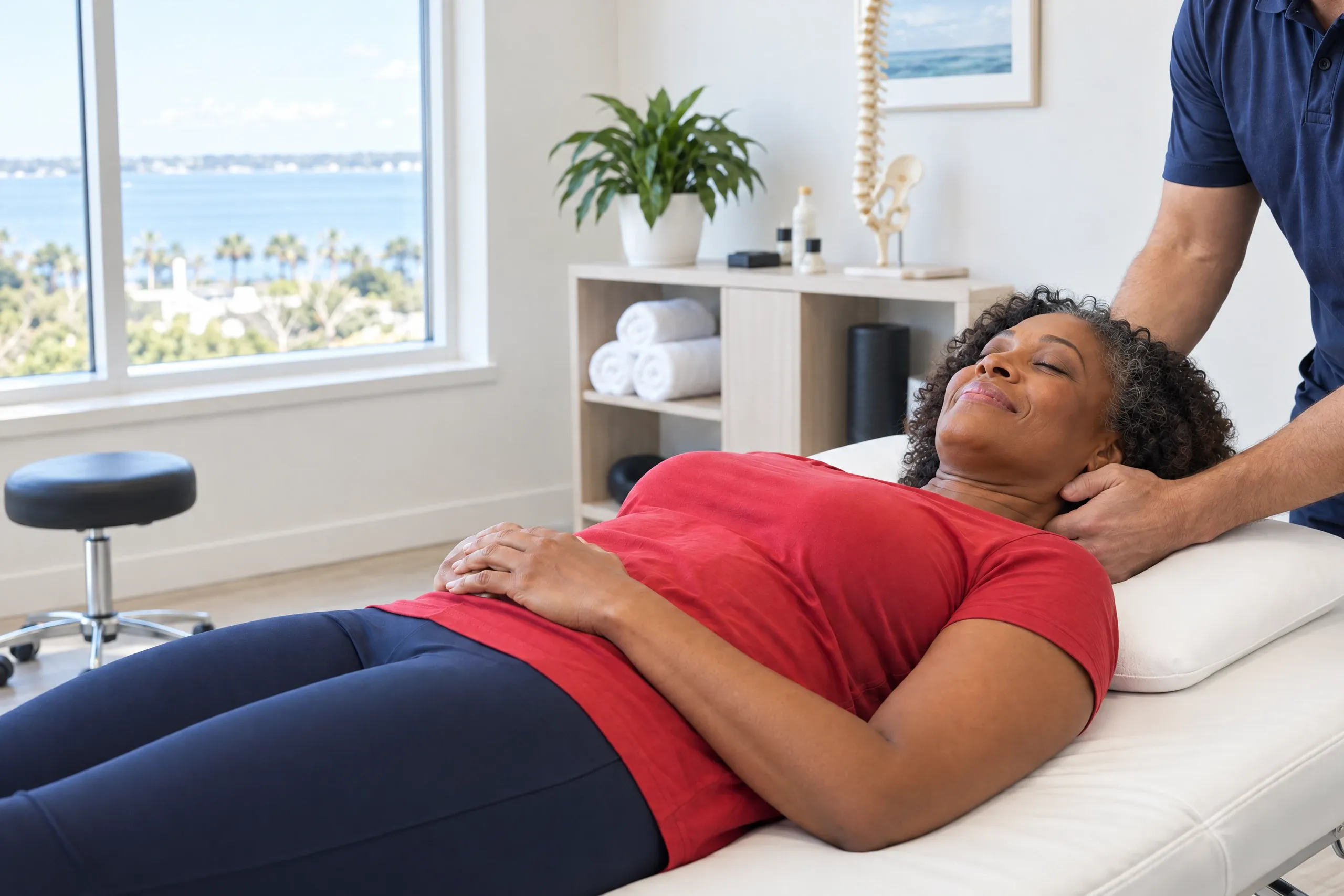
Relief for Neck Pain and Tension Without Surgery

Recognizing the Signs
Neck pain is pain or stiffness in the cervical spine, the seven small bones that hold up your head, along with the discs, joints, nerves and muscles around them. Most neck pain is mechanical, which means it comes from muscles, joints and posture rather than a serious disease. Neck pain treatment at Ready Pain Management in Gulf Breeze focuses on finding the source and easing it without surgery.
When you turn to check a blind spot, look down at a phone for too long or wake up with a stiff neck, you feel it. Pain may stay in the neck or spread into the shoulders, the upper back, the head or down an arm.
Ongoing neck pain can bring on headaches, cut into sleep and make a workday feel twice as long. Many people start to avoid driving or exercise. Neck pain is one of the many conditions we treat in Gulf Breeze, FL, and relief is often possible with the right plan.
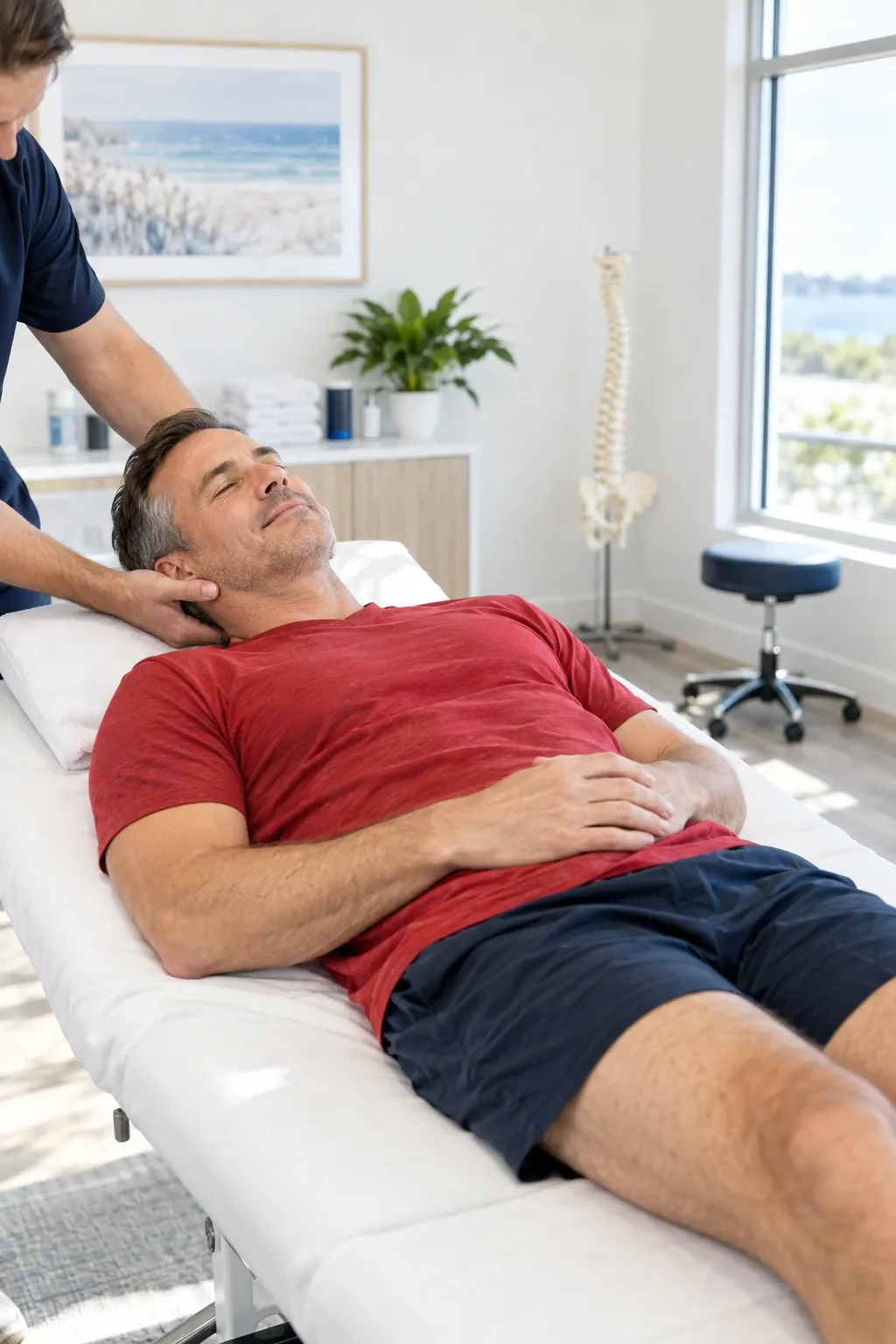
Understanding the Root Causes
An adult head weighs roughly 10 to 12 pounds. When it drifts forward over a phone or screen, the neck muscles must work much harder to hold it up. Hours of this strain tire the muscles and stress the small joints of the spine. MedlinePlus lists strain, injury, arthritis and disc problems among the common causes of neck pain.
Sudden injuries matter too. Whiplash from a car accident stretches the muscles and ligaments of the neck, and pain may not show up until a day or two later. With age, discs lose water and the joints wear, a process called cervical spondylosis. Worn discs or bone spurs can press on a nerve and send pain or tingling into the arm.
Tight neck muscles can form trigger points, small knots that stay contracted and send pain into the head and shoulders. Trigger point injections for neck muscle knots place a small dose of numbing medicine into the knot to help it release.
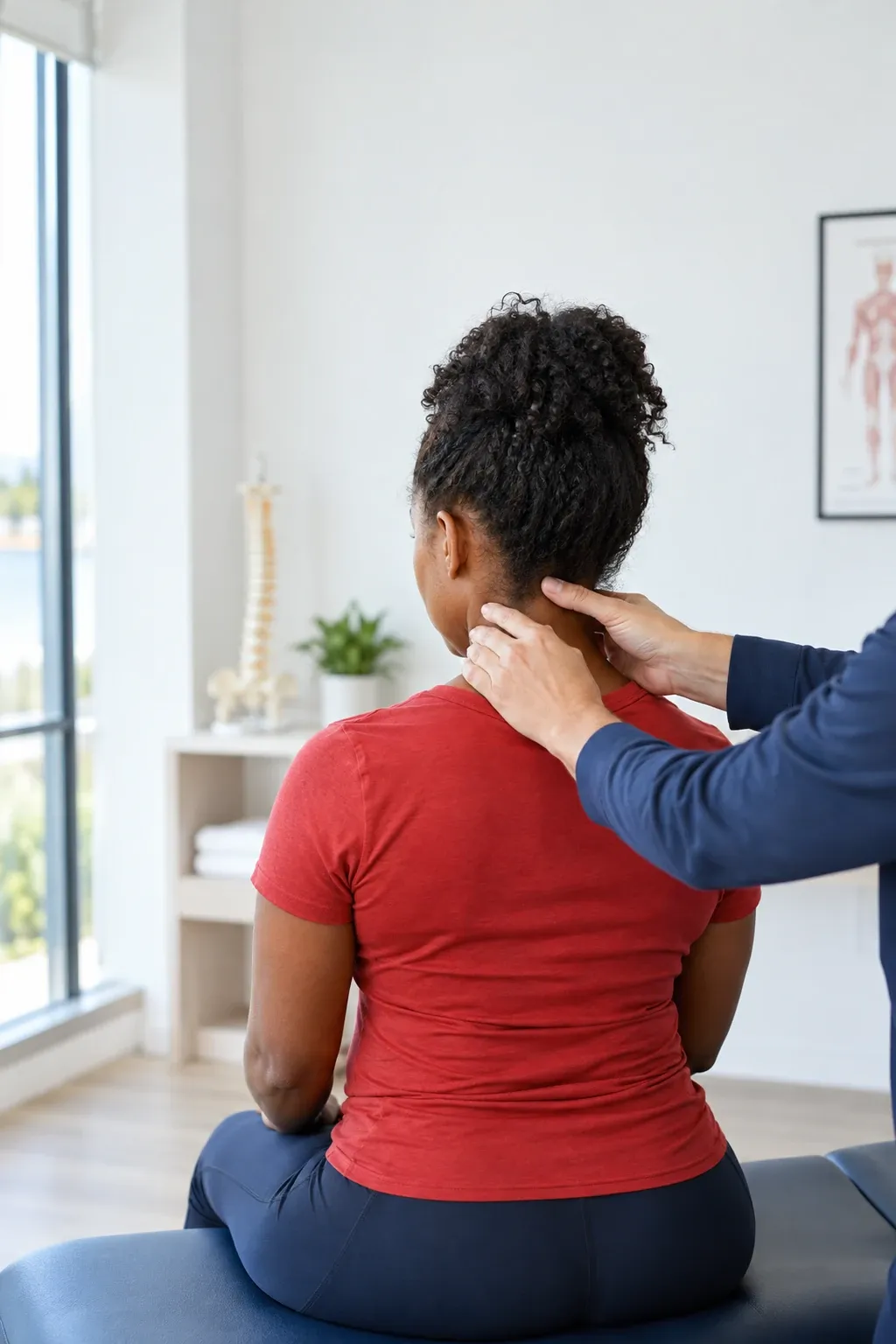
How Tight Muscles Keep Pain Going
Pain causes muscles to tighten, and tight muscles cause more pain. This pain and spasm cycle can keep neck pain going long after the first strain has healed. Breaking the cycle is often the first goal of care.
Some people have cervical dystonia, a nerve condition that causes painful, involuntary neck muscle contractions that twist or tilt the head. The National Institute of Neurological Disorders and Stroke explains how dystonia affects muscle control. Botox is FDA approved for cervical dystonia. For other kinds of neck spasm, use is off-label, and Dr. Boler will explain whether Botox for neck muscle spasm makes sense for you.
Hands-on care also helps loosen tight tissue. Therapeutic massage for neck tension and Medicupping are provided by Kimberly Boler, LMT (MA76368). Research suggests massage may ease neck pain in the short term, and it works best as part of a full plan.
Identifying Your Triggers
Looking down at phones, laptops and paperwork for hours loads the neck muscles and small spinal joints far more than upright posture.
A sudden jolt stretches neck muscles and ligaments, and stiffness or headaches may not appear until a day or two later.
Sleeping on your stomach or on a pillow that is too high or too flat can leave the neck twisted for hours each night.
Stress tightens the muscles of the neck, shoulders and jaw, and many people clench without noticing, which feeds tension.
Discs thin and joints wear with age, which can stiffen the neck and sometimes pinch a nerve that runs into the arm.
Overhead work, heavy lifting and long drives keep the same neck muscles working without a break, so they tire and tighten.
Expert Care in Gulf Breeze
Finding Your Best Approach
Compare the non-surgical neck pain options we offer in Gulf Breeze. Many plans combine more than one.
| Treatment | Best For | Session Time | Results Timeline | Maintenance |
|---|---|---|---|---|
| Trigger Point Injections | Tight muscle knots | About 15 to 30 minutes | Often within days | Only if needed |
| Botox for Pain and Muscle Spasticity | Spasm, cervical dystonia | About 15 to 20 minutes | Often 1 to 2 weeks | About every 12 weeks |
| Therapeutic Massage | Muscle tension, stiffness | Matched to your plan | Often after one visit | Regular visits help |
| Cupping Therapy (Medicupping) | Tight neck and upper back | Matched to your plan | Often after one visit | As part of a plan |

Recognizing When to Seek Help
The best treatment depends on what is causing your pain, and most neck pain improves without surgery. Muscle knots often respond to trigger point injections or therapeutic massage. Painful spasm may respond to Botox in selected cases. Gentle movement and posture changes help almost everyone. Dr. Boler examines your neck first, then builds a plan that fits your goals.
Botox can help neck pain caused by certain muscle conditions, and it is FDA approved for cervical dystonia. For other types of neck spasm, its use is off-label. It relaxes overactive muscles for about three months at a time. Dr. Boler will explain whether Botox is a good fit for your type of neck pain or whether another option makes more sense.
Many people feel some relief within minutes to a few days after trigger point injections. The numbing medicine works quickly, and mild soreness at the site usually fades in a day or two. Results vary from person to person. Some patients need only one or two visits, while others benefit from injections combined with massage and home stretching.
Yes, neck pain and stiffness often appear a day or more after a car accident. Muscles and ligaments may be strained even when you feel fine at the scene. Seek emergency care first for severe pain, numbness or weakness after a crash. Once serious injury is ruled out, we can help you manage lingering whiplash pain and muscle tension.
Neck pain is an emergency when it comes with weakness or numbness in the arms or legs, trouble walking, loss of bladder or bowel control, high fever with a stiff neck, or follows a major fall or crash. Call 911 or go to the nearest emergency room for these signs. Neck pain without these warning signs can usually be evaluated in our office.
No, Ready Pain Management does not accept insurance and works as a self-pay practice. Pricing is personalized and reviewed with you at your consultation, so you know your costs before treatment starts. Third-party financing is available through InstaPaytient with Affirm, subject to approval, and the financing provider sets the terms.
Yes, your first consultation and follow-up visits can be done by telemedicine. Treatments such as injections, Botox and massage are performed in person at our Gulf Breeze office. Telemedicine visits are offered Monday and Tuesday from 6:00 to 7:00 PM CST and on Thursday and Friday alongside in-person care.
1337 Country Club Rd, Gulf Breeze, FL, 32563
Mon - Tue: 6 PM - 7 PM
Thu - Fri: 9 AM - 5 PM