Long Hours Sitting
Sitting puts more pressure on the lower discs, so desk jobs and long drives can stir up sciatic pain.

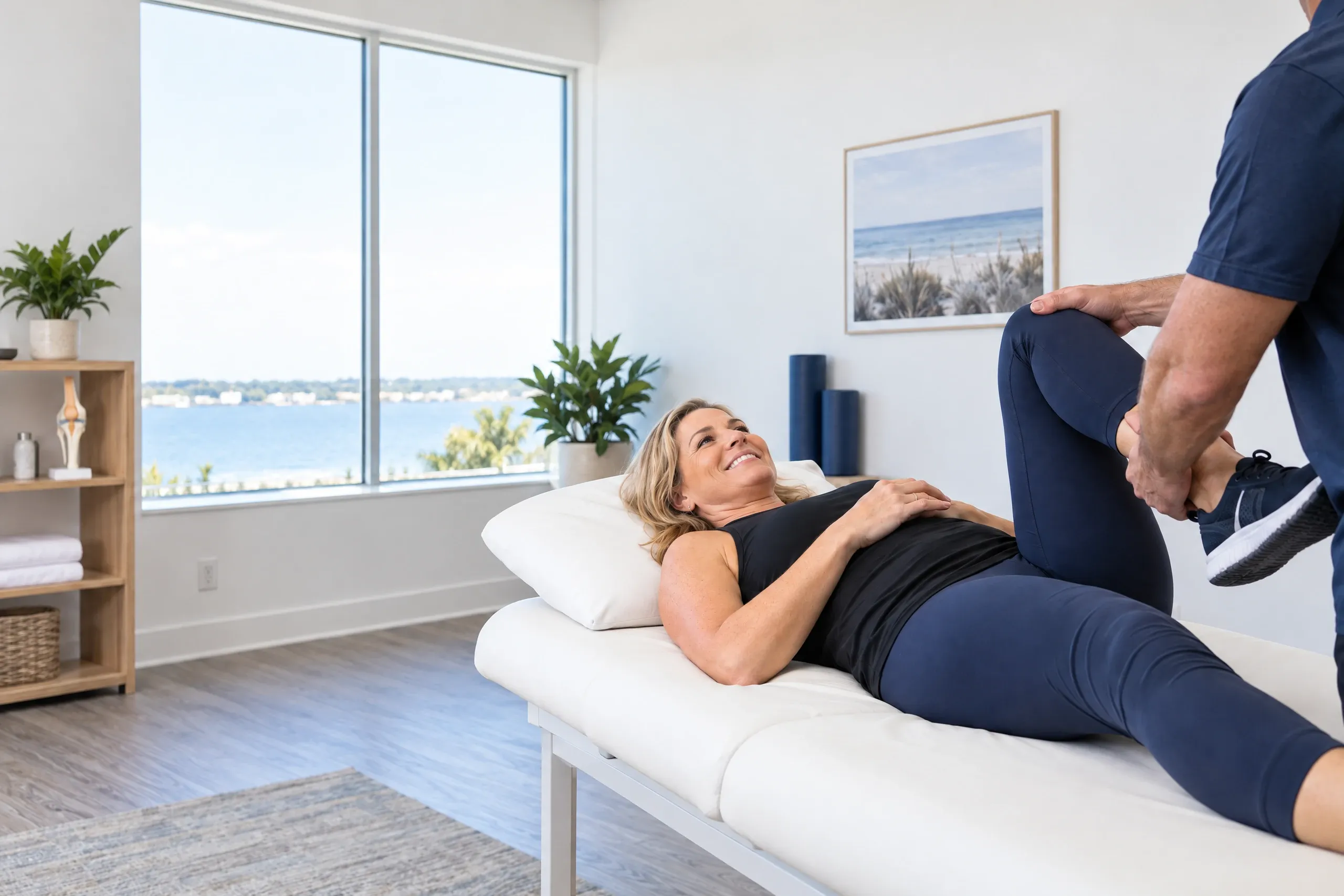
Relief for Sciatic Nerve Pain and Leg Discomfort

Recognizing the Signs
Sciatica treatment works best when it targets what is irritating the nerve. Sciatica is pain that follows the path of the sciatic nerve, the longest nerve in the body. It starts in the lower back, runs through the buttock and travels down the back of each leg. Doctors often call it lumbar radiculopathy when a spinal nerve root is involved.
When you have sciatica, you may feel a sharp, burning or electric pain that shoots from your low back or buttock down one leg. Some people also notice numbness, tingling or weakness in the leg or foot. Sitting, coughing or bending forward can make it worse.
Leg pain can make a drive across the Pensacola Bay Bridge, a workday or a night of sleep feel exhausting. At Ready Pain Management in Gulf Breeze, we help adults from Pensacola, Navarre and Santa Rosa County find sciatica pain relief with a non-surgical, non-opioid first plan. It is one of several pain conditions we treat.

Understanding the Root Causes
The sciatic nerve forms from several nerve roots that leave the lower spine. A herniated or bulging disc is the most common cause. The soft center of the disc pushes out and presses on a nerve root, and chemicals from the disc can inflame it. Other causes include narrowing of the spinal canal, called spinal stenosis, and a slipped vertebra.
Pain can also come from outside the spine. Tight or irritated muscles deep in the buttock, such as the piriformis, can squeeze the nerve and copy sciatica symptoms. The National Library of Medicine notes that most sciatica improves on its own over time, although some people need more help to get there.

How Muscles Affect Sciatic Pain
Sciatica rarely involves the nerve alone. When a nerve is irritated, nearby muscles in the low back, hips and buttocks often guard and tighten. Those tight bands, called trigger points, can add their own pain and keep the cycle going long after the first flare.
That is why our plans often treat the muscles around the nerve. Trigger point injections for tight gluteal and back muscles place a small dose of local anesthetic, with or without a corticosteroid, into the painful knot. Shockwave therapy for low back and hip muscles uses acoustic waves to ease tension and support healing. Some patients add therapeutic massage with Kimberly Boler, LMT (MA76368). Results vary.
If you also have ongoing low back pain, our back pain care page covers that side of the problem. Severe nerve compression may need imaging or a spine surgeon, and we will refer you when your exam points that way.
Identifying Your Triggers
Sitting puts more pressure on the lower discs, so desk jobs and long drives can stir up sciatic pain.
Lifting heavy objects with a rounded back or a twist can strain a disc and irritate a nerve root.
Weak abdominal and back muscles give the spine less support, which adds load to the discs and joints.
Discs lose water and height with age, which can narrow the space where nerve roots leave the spine.
Carrying extra weight increases the load on the lower spine and may raise the risk of disc problems.
Tight piriformis and gluteal muscles can press on the sciatic nerve as it passes through the buttock.

Expert Care in Gulf Breeze
Finding Your Best Approach
Compare the in-office sciatica options we offer so you can see how each one supports relief.
| Treatment | How It Works | Visit Type | Downtime | Best For |
|---|---|---|---|---|
| Shockwave Therapy | Acoustic waves to tight back and hip muscles | In person | Usually none | Ongoing low back and buttock tension |
| Trigger Point Injections | Targeted injection into a painful muscle knot | In person | Little to none | Tight gluteal or back muscle knots |
| Therapeutic Massage | Hands-on work on back, hip and leg muscles | In person | None | Muscle guarding and stiffness |

Recognizing When to Seek Help
There is no instant fix, but many people feel better within weeks with the right plan. Staying gently active, short walks, heat and simple stretches help early on. When pain lingers, in-office options such as trigger point injections or shockwave can calm the muscles around the nerve. Dr. Boler will match the plan to your cause and goals.
Many sciatica flares improve within 4 to 6 weeks, although some last several months. Pain that keeps coming back or lasts longer than a few months often has a muscle or disc component that needs more focused care. Results vary, and a clear diagnosis helps you know what to expect.
Go to the emergency department right away if you lose control of your bladder or bowels, feel numb in the groin or inner thighs, or have rapidly worsening leg weakness. These can be signs of serious nerve compression called cauda equina syndrome. Fever with back pain or pain after a major fall also needs prompt medical attention.
They can help when tight back, hip or buttock muscles add to sciatic pain. Trigger point injections relax painful muscle knots, and shockwave therapy has shown benefit for chronic low back pain in clinical studies. They do not shrink a herniated disc. Dr. Boler will explain whether muscle-focused care is likely to help in your case.
Most people with sciatica do not need surgery. Non-surgical care helps the majority of patients, and surgery is usually considered for severe weakness, emergency signs or pain that does not improve after months of good care. If your exam suggests a surgical problem, we will refer you to a spine specialist.
Pricing is personalized and reviewed with you at your consultation. Ready Pain Management does not accept insurance, so care is self-pay. Third-party financing is available through InstaPaytient (through Affirm), subject to approval, with terms set by the financing provider. We explain the full plan and costs before you begin.
Yes, your consultation and follow-up visits can be done by telemedicine. Dr. Boler can review your symptoms, history and goals over video and decide what needs an in-person exam. Injections, shockwave and massage are performed in person at our Gulf Breeze office, which serves Pensacola, Navarre and Milton.
1337 Country Club Rd, Gulf Breeze, FL, 32563
Mon - Tue: 6 PM - 7 PM
Thu - Fri: 9 AM - 5 PM