Long Hours Standing
Jobs that keep you on hard floors all day, such as nursing, retail or teaching, load the heel with little chance to recover.


Non-Surgical Relief for Heel Pain and Plantar Fasciitis

Recognizing the Signs
Plantar fasciitis treatment starts with understanding the problem. Plantar fasciitis is irritation and small-scale damage of the plantar fascia, a thick band of tissue that runs along the bottom of your foot from the heel bone to the toes. It acts like a bowstring that supports your arch every time you stand, walk or run.
When you have it, the first steps out of bed often feel like stepping on a stone or a bruise. The pain usually eases after a few minutes of walking, then returns after long periods on your feet or after sitting for a while.
Heel pain can make work shifts, morning walks on the beach and time with family feel harder than they should. At Ready Pain Management in Gulf Breeze, we see patients from Pensacola, Navarre and across Santa Rosa County who have tried rest, new shoes and stretching and still hurt. It is one of several pain conditions we treat with a non-surgical, non-opioid first plan.
Understanding the Root Causes
A healthy plantar fascia stretches a little and springs back thousands of times a day. When the load on the tissue is more than it can recover from, tiny tears form where the fascia attaches to the heel. Over time the tissue thickens and becomes less elastic. Many experts now describe long-standing cases as a degenerative problem, not only inflammation, which is why rest alone does not always fix it.
Tight calf muscles and a stiff Achilles tendon pull on the heel and add strain to the fascia. Weak foot muscles, flat feet or high arches change how force spreads across the foot. The National Library of Medicine notes that plantar fasciitis is one of the most common causes of heel pain in adults.

How Chronic Strain Affects Healing
Most people improve within a year with simple care such as stretching, supportive shoes and activity changes. A smaller group keeps hurting past six months. In these chronic cases the fascia often shows thickening and poor blood flow, so the body struggles to finish the repair on its own.
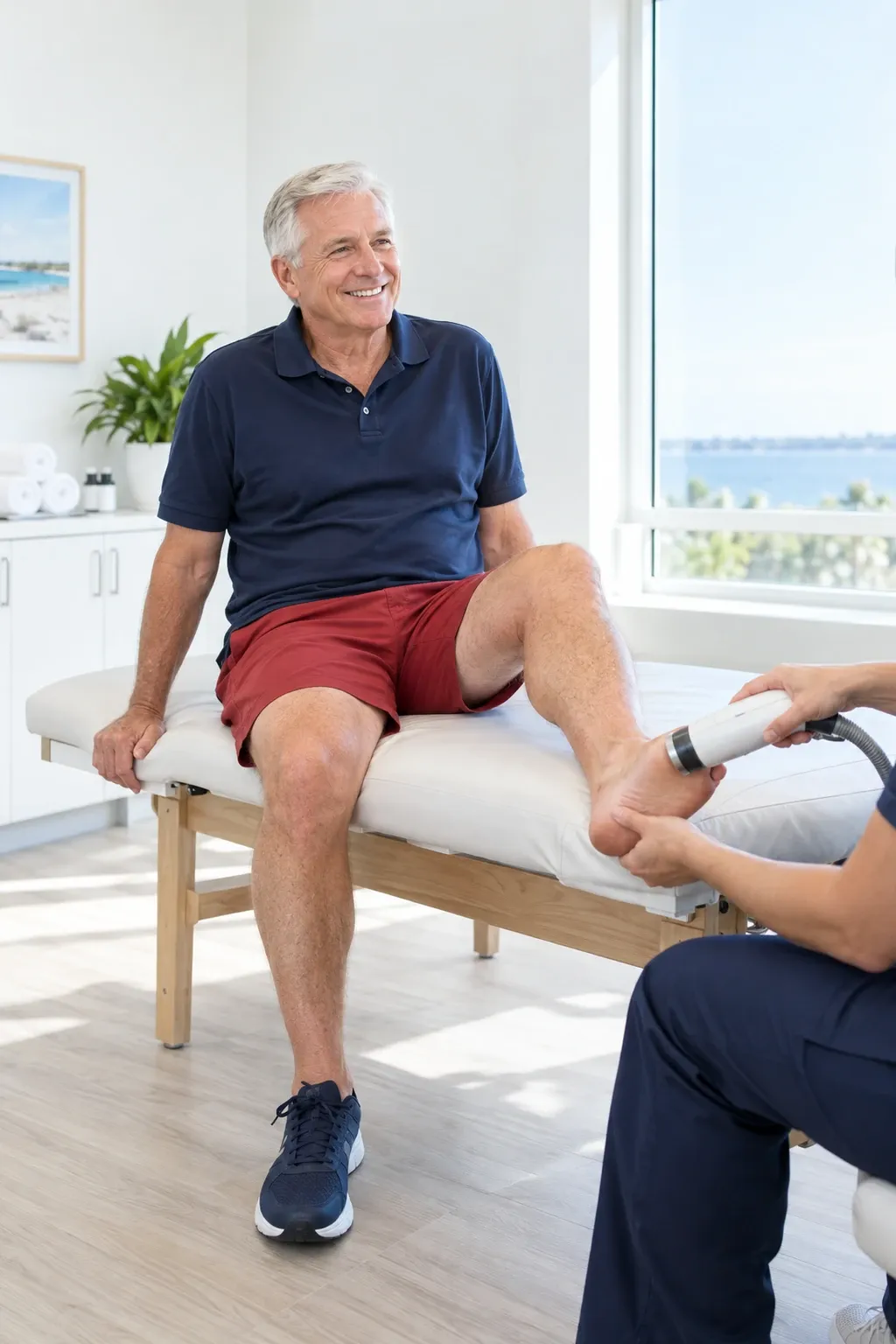
This is where shockwave therapy for heel pain fits. Acoustic pressure waves are delivered through the skin to the painful area. Research suggests this can calm pain signals and encourage the local healing response in stubborn tissue. Shockwave devices hold FDA clearance for specific indications, and chronic proximal plantar fasciitis is one of them.
Tight calves and foot muscles also play a role. Some patients add therapeutic massage for tight calves and feet with Kimberly Boler, LMT (MA76368), and weight that strains the feet can be addressed through physician-guided weight management. Results vary from person to person.
Identifying Your Triggers
Jobs that keep you on hard floors all day, such as nursing, retail or teaching, load the heel with little chance to recover.
A tight calf or Achilles tendon pulls on the heel bone and adds tension to the fascia with every step you take.
Extra body weight increases the force on the bottom of the foot, which is why weight is a well-known risk factor.
Flip-flops, worn-out sneakers and bare feet on hard surfaces leave the arch with little support during the day.
Starting a new running plan, long beach walks or a jump in daily steps can overload tissue that is not ready.
Flat feet, high arches or an uneven walking pattern change how pressure spreads across the heel and arch.

Expert Care in Gulf Breeze
Finding Your Best Approach
Compare the in-office options we use for heel pain so you can see how each one supports your recovery.
| Treatment | How It Works | Visit Type | Downtime | Best For |
|---|---|---|---|---|
| Shockwave Therapy | Radial or focused acoustic waves to the heel | In person | Usually none | Heel pain lasting more than a few months |
| Therapeutic Massage | Hands-on work on calf and foot muscles | In person | None | Tight calves adding strain to the heel |

Recognizing When to Seek Help
Many patients report less heel pain after a series of shockwave sessions, and several reviews of randomized trials support its use for chronic plantar fasciitis. It tends to help most when pain has lasted several months and simple care has not been enough. Results vary, and Dr. Boler will tell you honestly whether you are a good fit after your exam.
Most cases improve within several months to a year with consistent care. Chronic heel pain that lasts longer than six months often needs more than rest and new shoes. A plan that combines stretching, footwear changes and in-office treatment such as shockwave can help the tissue respond, although timelines differ for each person.
Most people never need surgery for plantar fasciitis. Non-surgical care works for the large majority of patients, and surgery is usually considered only after many months of failed conservative treatment. Our goal is to help you find relief with non-invasive options first, and we will refer you to a foot and ankle surgeon if your exam suggests it.
Shockwave sessions can feel uncomfortable, but most patients tolerate them well. You may feel a tapping or pulsing sensation over the heel, and the intensity is adjusted to your comfort. Many people return to normal activities the same day. Mild soreness for a day or two afterward is possible and usually fades on its own.
Pricing is personalized and reviewed with you at your consultation. Ready Pain Management does not accept insurance, so care is self-pay. Third-party financing is available through InstaPaytient (through Affirm), subject to approval, with terms set by the financing provider. We will explain the full plan and costs before you begin.
Yes, your consultation and follow-up visits can be done by telemedicine. Dr. Boler can review your history, symptoms and goals over video. Shockwave and other hands-on treatments are performed in person at our Gulf Breeze office, which serves Pensacola, Navarre, Milton and the wider Florida Panhandle.
1337 Country Club Rd, Gulf Breeze, FL, 32563
Mon - Tue: 6 PM - 7 PM
Thu - Fri: 9 AM - 5 PM