Heel and Arch Pain
Chronic plantar fasciitis and heel pain that lasts past 3 months

Non-invasive soundwave therapy for pain, injury and faster recovery, with no needles and no surgery.
When healing stalls
Some injuries never fully heal. A tendon that has been strained for months can stop repairing itself, and a tight band of muscle can keep firing pain long after the first injury. Rest, ice and pain pills may take the edge off, but they do not restart the repair process. Many people end up living with heel pain, tennis elbow or a stiff shoulder for a year or more.
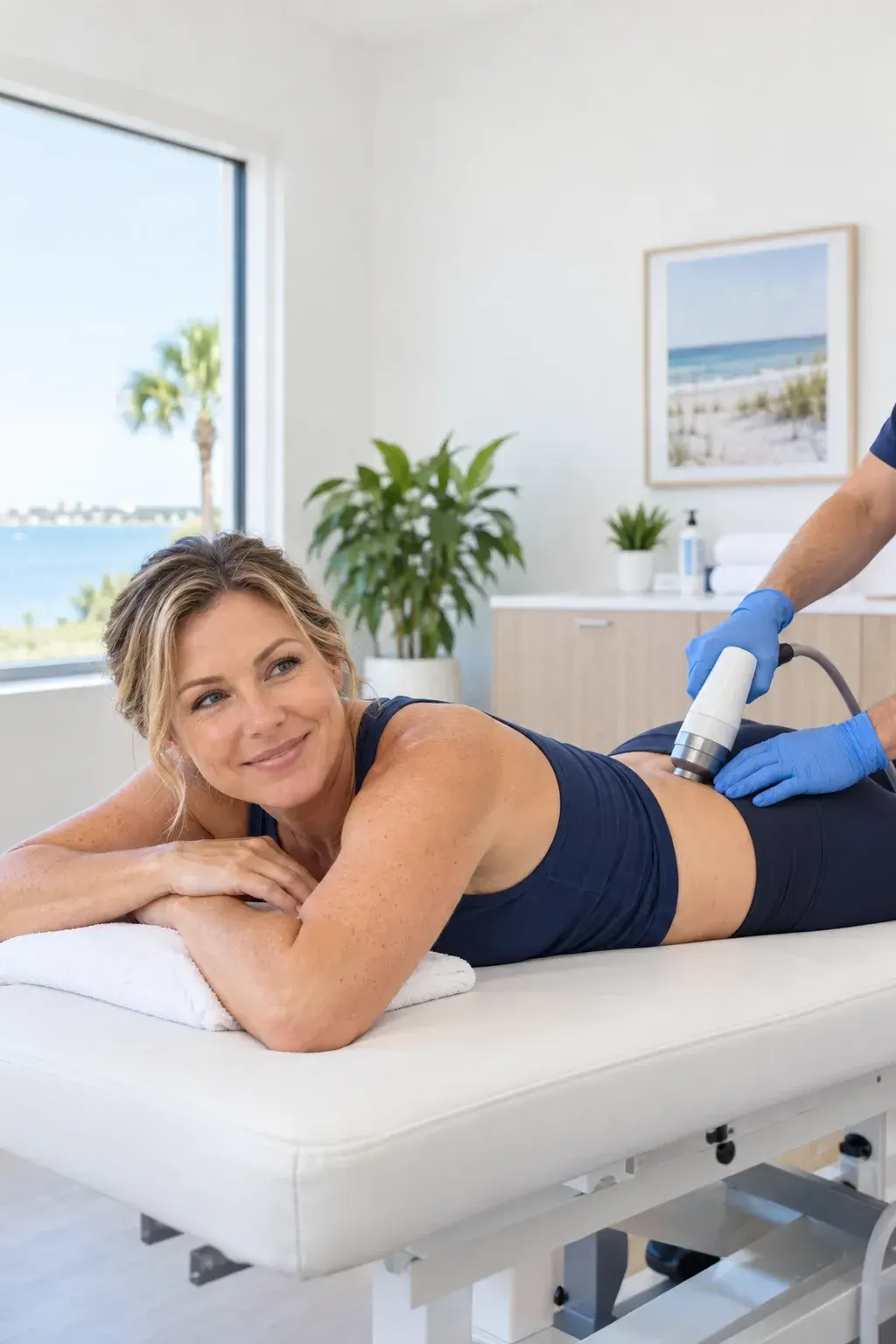
Shockwave therapy gives stalled tissue a new signal to heal. Each pulse creates a controlled mechanical stress that improves local blood flow, eases pain signals and encourages new tissue repair. It is a non-surgical, non-opioid option that fits well with stretching, strengthening and other care. Most sessions take minutes, and you can usually drive home and go back to your day.
Good to Know
Extracorporeal shockwave therapy (ESWT) explained
Shockwave therapy, also called extracorporeal shockwave therapy or ESWT, uses acoustic pulses delivered through the skin to treat musculoskeletal pain. We use FDA-cleared shockwave technology for specific indications, such as chronic plantar fasciitis and tennis elbow, and for other tendon and muscle pain.
Radial shockwave spreads energy across a wider, shallower area, which suits tight muscles. Focused shockwave concentrates energy deeper, which suits stubborn tendons. A systematic review of randomized trials found ESWT reduced pain in chronic plantar fasciitis. Relief often builds over several weeks.
Six common reasons patients book
Chronic plantar fasciitis and heel pain that lasts past 3 months
Tennis elbow and inner elbow pain from repeated gripping
Rotator cuff tendon pain and calcific tendinitis
Patellar tendon pain and Achilles tendinopathy
Chronic low back pain and tendon pain around the hip
Tight, tender trigger points in the neck, back and shoulders
Why patients choose it






Energy passes through the skin, so there are no incisions and no anesthesia
Most treatments take 10 to 20 minutes, and you can usually drive yourself home
Most people go back to work and normal walking the same day
Treats the painful tissue directly, without relying on opioid pain pills
Improves local blood flow and helps restart repair in stalled tendons
Works alongside stretching, strengthening and our other pain therapies
Compare your options
How shockwave therapy compares with common options for tendon and muscle pain.
| Treatment | Mechanism | Needles or Incisions | Session Time | Downtime | Results Timing | Best For |
|---|---|---|---|---|---|---|
| Shockwave therapy | Acoustic pulses that stimulate tissue repair | None | 10 to 20 minutes | Little to none | Builds over 6 to 12 weeks | Chronic tendon pain and stubborn heel pain |
| Corticosteroid injection | Calms inflammation in one spot | Needle | About 15 minutes | 1 to 2 days | Days | Short-term relief of a flare |
| Trigger point injections | Local anesthetic releases a tight muscle knot | Small needle | 15 to 30 minutes | Minimal | Hours to days | Muscle knots and myofascial pain |
| Physical therapy | Guided stretching and strengthening | None | 45 to 60 minutes | None | Several weeks | Almost everyone, often alongside shockwave |
| Surgery | Repairs or releases damaged tissue | Incisions | 1 to 2 hours | Weeks to months | After healing | Severe cases that fail other care |

Shockwave therapy works best for tendon and muscle pain that has lasted for weeks or months. It is a common choice for plantar fasciitis heel pain, shoulder tendon pain, knee pain from tendon strain and sports injuries that heal slowly. The National Institute of Arthritis and Musculoskeletal and Skin Diseases explains how these overuse injuries develop.
If shockwave is not the right fit, Dr. Boler will explain other options, including referral when imaging or surgery is needed.
About 20 to 30 minutes, start to finish
Dr. Boler examines the painful area, reviews your history and picks radial, focused or both.
We find the most tender spot by touch and apply a thin layer of gel to help the waves pass through.
A handheld applicator delivers rapid pulses for about 10 to 20 minutes while we adjust strength to you.
You leave with simple stretches, activity tips and a schedule for your next weekly session.
What to watch for
Shockwave therapy is well tolerated. The most common effects are redness, mild swelling, tenderness and a dull ache in the treated area. Some people see small spots of bruising. These usually fade within a few days.
A short increase in pain can happen before relief begins. Rarely, skin irritation or numbness occurs. A meta-analysis of shockwave for chronic low back pain reported it was safe, with no serious complications.
Call (850) 735-4907 if you notice severe pain, spreading redness, fever or numbness that does not go away.
Personalized pricing, reviewed at consultation
Shockwave therapy pricing at Ready Pain Management is personalized. We review your price at the consultation once Dr. Boler has examined you and planned the number of sessions you need, so you know what your plan includes before you start.
Your cost depends on a few factors:
Exact pricing will be discussed during your personalized consultation.
Ready Pain Management does not accept insurance, and all care is self-pay. Third-party financing is available through InstaPaytient, through Affirm, subject to approval, with terms set by the financing provider. Call (850) 735-4907 with any questions.
A physician who listens first
Book NowDr. Boler, MD, has more than 20 years in pain medicine
Both shockwave types, matched to how deep your pain sits
Shockwave combined with exercise, massage or injections as needed
Hands-on and device-based care before pain pills
About 10 to 20 minutes, and you can usually drive yourself home
Consultation and follow-up visits can be done by telemedicine
Treatments that pair well with shockwave therapy at our Gulf Breeze office.
Trigger point injections in Gulf Breeze, FL. Fast relief for muscle knots and myofascial pain. Book your appointment today.
Learn moreTherapeutic massage in Gulf Breeze, FL. Licensed massage therapy for pain relief and recovery. Book your appointment today.
Learn moreCupping therapy in Gulf Breeze, FL. Vacuum-assisted Medicupping for pain, circulation and recovery. Book today.
Learn moreEmsculpt NEO in Gulf Breeze, FL. Non-invasive body contouring and muscle building. Book your appointment today.
Learn moreShockwave therapy pricing is personalized and reviewed at your consultation. Ready Pain Management does not accept insurance, so care is self-pay. Your price depends on the area treated and how many sessions you need. Third-party financing through InstaPaytient, through Affirm, is available subject to approval.
Most people feel mild to moderate discomfort during shockwave therapy, but not sharp pain. The pulses feel like quick tapping or thumping over the sore spot. We start at a low setting and adjust the strength to your comfort. The area may feel tender for a day or two afterward, which usually fades on its own.
Most patients need 3 to 6 shockwave therapy sessions spaced about one week apart. Long-standing tendon pain may need more visits, while a newer problem may need fewer. Dr. Boler sets your plan after an exam and adjusts it based on how your pain responds over the first few weeks.
Many people notice less pain after 2 to 3 shockwave therapy sessions. The fullest benefit often appears 6 to 12 weeks after treatment ends, because the tissue keeps healing between and after visits. Results vary, and some conditions respond faster than others.
Shockwave therapy results are often long lasting, especially when the tendon has healed and you keep up your home exercises. Some patients stay comfortable for many months or longer. If pain returns because of overuse or a new injury, a short follow-up course can be planned.
Yes, shockwave therapy is one of the best studied non-surgical options for chronic plantar fasciitis. Research reviews show it can reduce heel pain and improve walking in people whose pain lasted months. It works best combined with calf stretching, supportive shoes and steady activity changes.
Neither is better for everyone. Radial shockwave spreads energy across a wider, shallower area and suits tight muscles and broad sore spots. Focused shockwave reaches deeper and suits stubborn tendon problems near bone. Dr. Boler chooses the type, or a mix of both, based on your exam.
A steroid injection calms inflammation quickly, while shockwave therapy works to restart healing over several weeks. Shockwave uses no needles and no medicine. Some research suggests shockwave may give longer lasting relief for chronic heel pain, while an injection may help a sudden flare sooner.
Shockwave therapy suits adults of all activity levels with tendon or muscle pain that has not improved with rest and home care. We treat women and men from their 30s to their 60s and beyond, including weekend athletes, people who work on their feet and older adults who want to stay active.
Yes, your first consultation and follow-up visits can be done by telemedicine. The shockwave therapy itself is performed in person at our Gulf Breeze office on Thursdays and Fridays. Telemedicine is offered Monday and Tuesday evenings and Thursday and Friday for eligible patients.
1337 Country Club Rd, Gulf Breeze, FL, 32563
Mon - Tue: 6 PM - 7 PM
Thu - Fri: 9 AM - 5 PM