Repetitive Motion
Repeating the same movement at work, in the yard or in sports can irritate tendons and the joint lining.


Relief for Aching, Stiff and Painful Joints

Recognizing the Signs
Joint pain is discomfort where two bones meet, such as the knee, hip, shoulder, elbow, wrist or ankle. It can come from the joint itself or from the tendons, ligaments and muscles around it. Joint pain relief at Ready Pain Management in Gulf Breeze, FL starts with finding which of these tissues is the real source.
When you have joint pain, you may feel a deep ache after activity, a sharp pinch with certain movements or stiffness after sitting. Some joints swell, click or feel unstable.
Painful joints can turn simple tasks, like carrying groceries or walking the dog, into chores. Many patients tell us they want answers, not just another prescription. Our team, led by Dr. Douglas Boler, MD, takes time to listen and explain.
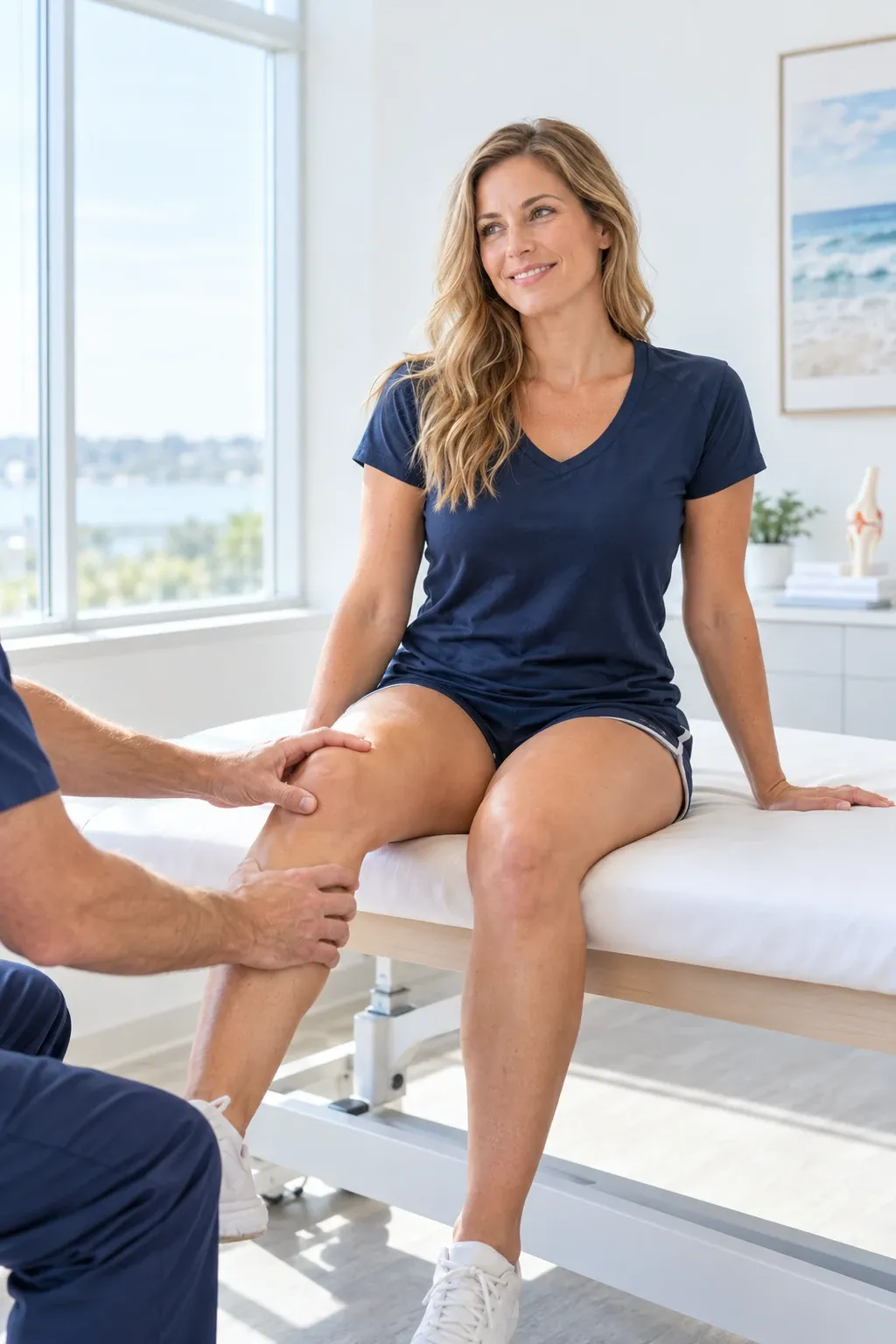
Understanding the Root Causes
A healthy joint has smooth cartilage, a thin lining that makes lubricating fluid and strong tendons and ligaments that hold it steady. The human body has more than 300 joints, and the ones that carry weight or move the most are the most likely to hurt.
Overuse, injury or age can irritate one part of this system. Tendons may develop small tears, the joint lining may swell or cartilage may wear thin. Nearby muscles tighten to protect the joint, which can create painful knots that add to the problem.
Less movement then weakens supporting muscles, so the joint takes even more stress. MedlinePlus lists many causes of joint pain, from arthritis and bursitis to tendon injuries and gout.

Finding the Right Next Step
Joint pain is a broad term, so we look at which joint hurts and why. Knee pain is one of the most common complaints, and our knee pain care page covers it in depth.
Shoulder pain often involves the rotator cuff tendons or the joint capsule. Our shoulder pain care page explains it. If several joints are stiff and achy, arthritis may be the cause. Our arthritis care page explains how we manage it.
Pain in many joints at once, along with fever, rash or severe swelling, can signal an inflammatory or infectious problem that needs prompt medical attention. Our article on the top causes of chronic pain in adults over 30 also covers common joint pain patterns.
Identifying Your Triggers
Repeating the same movement at work, in the yard or in sports can irritate tendons and the joint lining.
A past sprain, fracture or tear can change how a joint moves and lead to pain years later.
More body weight adds load to the knees, hips and ankles with every step you take.
When the muscles around a joint are weak, more force reaches the cartilage and ligaments.
Cartilage holds less water with age, so it cushions the joint less well over time.
Joints rely on movement to stay lubricated, so long hours of sitting can increase stiffness.

Physician-Led Care in Gulf Breeze
Finding Your Best Approach
Compare the joint pain treatment options we offer in Gulf Breeze to see how each one may fit your needs.
| Treatment | How It Works | Visit Type | Downtime | Best For |
|---|---|---|---|---|
| Shockwave Therapy | Acoustic waves support tissue healing | In office | Little to none | Tendon and chronic joint pain |
| Trigger Point Injections | Targeted local anesthetic, with or without steroid | In office, brief visit | Mild soreness for a day or two | Muscle knots near a joint |
| Medical Weight Management | Lowers load on weight-bearing joints | Telemedicine or in office | None | Knee, hip and ankle pain with extra weight |
| Peptide Therapy | Screened, physician-guided peptide plan | Telemedicine or in office | None | Recovery support, limited evidence |

Recognizing When to Seek Help
The best joint pain treatment depends on which joint hurts and what is causing the pain. Tendon problems, arthritis and muscle tension each respond to different care. Dr. Boler starts with a careful exam, then may recommend shockwave therapy, trigger point injections, strengthening or weight management. Most plans combine more than one option. Results vary.
Many people find joint pain relief without surgery through a mix of movement, targeted procedures and lifestyle changes. Guidelines support exercise and weight management for arthritis of the knee and hip. Shockwave therapy and trigger point injections may ease pain in tendons and nearby muscles. If your exam suggests you need a surgeon, we will tell you.
See a doctor if joint pain lasts more than a few weeks, keeps you from normal activities or returns often. Seek emergency care right away for a joint that is hot, red and very swollen, pain with fever, a joint that looks deformed after an injury or sudden inability to bear weight.
No, joint pain is not always caused by arthritis. Tendon irritation, bursitis, ligament injuries, muscle knots and nerve problems can all cause pain near a joint. That is why we examine the area carefully. When arthritis is the cause, our arthritis care page explains the options. Knee and shoulder pain each have their own detailed pages as well.
Yes, your first consultation and follow-up visits can be done by telemedicine. Telemedicine hours are Monday and Tuesday from 6:00 to 7:00 PM CST, plus Thursday and Friday during office hours. Hands-on treatments such as shockwave therapy and injections take place in person at our Gulf Breeze office on Thursday and Friday.
The cost of joint pain treatment depends on the therapies in your plan and how many visits you need. Ready Pain Management does not accept insurance, so care is self-pay. Your pricing is personalized and reviewed with you at the consultation. Third-party financing through InstaPaytient, by way of Affirm, may be available, subject to approval.
1337 Country Club Rd, Gulf Breeze, FL, 32563
Mon - Tue: 6 PM - 7 PM
Thu - Fri: 9 AM - 5 PM